
Leader's lifesaving collaboration toolkit
LIFT PERFORMANCE
How can you help your team go faster with less friction?
Meetings are one of the most visible and routine ways a team comes together which makes them a powerful lever for improving how the team works. But too often, they become places for passive updates, unclear decisions or surface-level conversation. Used well, meetings (and collaboration rituals more generally) can do SO much more.
They can set the fast agile tone you're looking for, make priorities clear and increase the pace of work. Let me show you how.
Three moves to reduce friction, energise people and up the pace

Codify 'what goes where'
so your teams stops wasting time in collaboration sludge.
Create a 5-word north star
which unifies the team and cuts through decision making.
Build a rhythm that takes the strain
and distributes ownership across the team.
1. Codify all your collaboration comms
It’s time for a new breed of norms which help us move fast without drowning in pings.
One of the fastest ways to reduce friction is to agree where things live and how people are expected to respond.
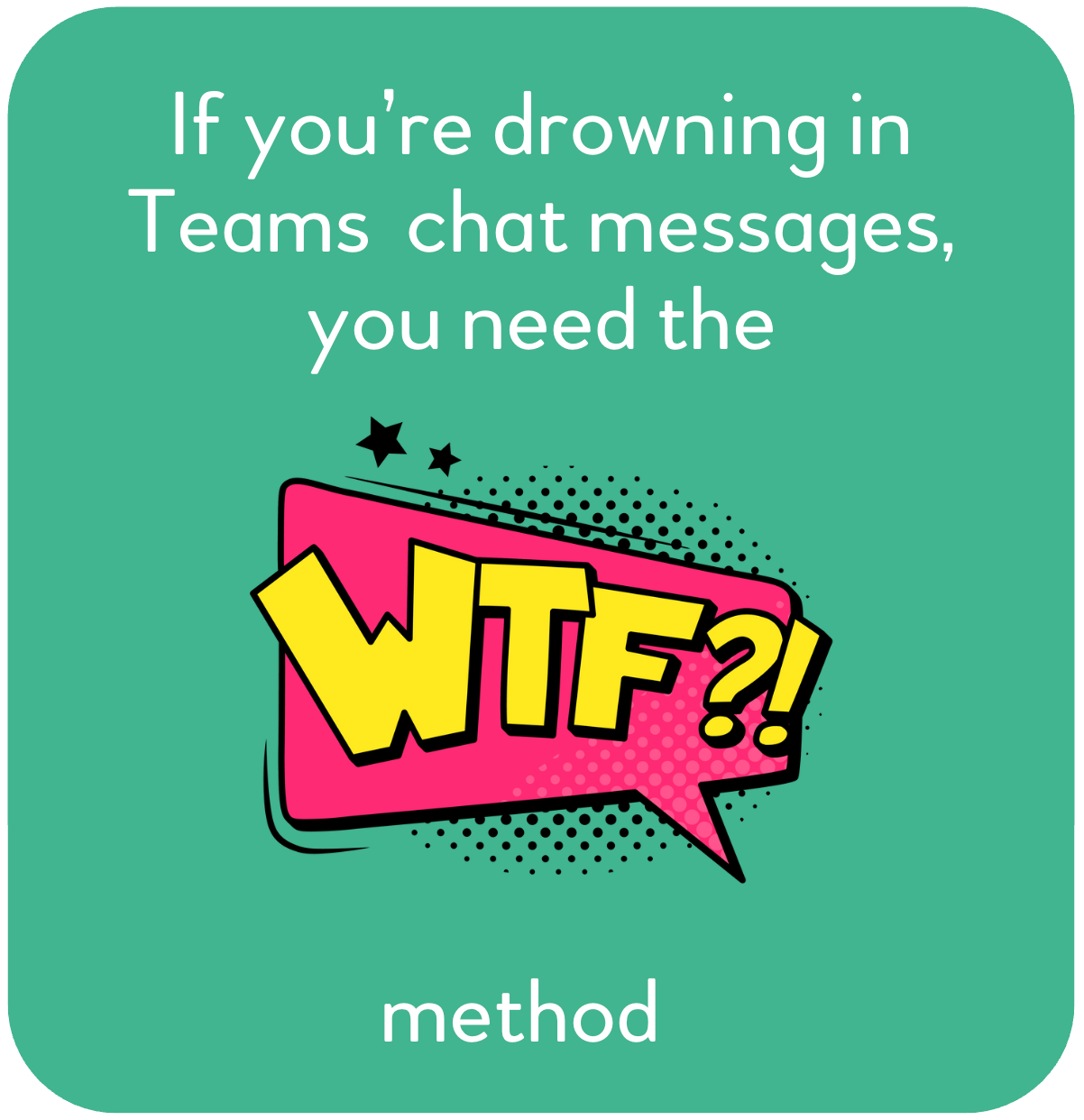
My favourite norms is called the WTF?! method (not least because it's the most fun to say).
The W and the T are for the poster:
• What
Label your message so people instantly know what it’s about. (E.g., [Decision Needed], [FYI], [Action Required], [Blocked], [Idea])
• Task
What's the ask here? Be direct and specific. What do people need to do? Put this very near the top. (See also BLUF - Bottom Line Up Front). Tell people what response you're looking for.
The F is for the recipients. Their job is to respond.
• Feedback
Close the loop. Acknowledge, react, confirm. Agree some norms for this in your team e.g. 👍 means 'Read it, on it'
Don't stop there.... show people 'what goes where'.
Introduce a few simple conventions for tools and messages do people know exactly what goes where.
Chat = nudges, quick questions, group updates, early discussions that hear lots of voices
Email = anything longer, sensitive or external
Docs = master docs to create a single source of truth (including where are they, what are they called and how to keep them up to date)
Meetings = only used for decisions, complex conversations or problem-solving.
And then create a weekly digest to help orientate people.
Use AI to create a weekly email either for the team (10min task) or for other teams to summarise what people might have missed and help people dive into the right places.
It might include:
- A reminder of things that need the team's response
- Decisions made this week
- Heads up / coming soon
This digest is a very simple way to surface what matters and minimise the effort of having people feel in the loop.
2. Create a 5-word 'north star' and use it everywhere
Most projects are a big old mish-mash of cluttered priorities. It's hard for people to know what the real criteria for success are.
So I’d write a short phrase (three to five words) that captures the picture of success.
For example:
🟢 Live by July (3 words)
🟢 Break even in 2025 (4 words)
🟢 The fastest on the market (5 words)
Then I’d put it:
- At the top of every doc
- On every meeting slide
- In every tough conversation
It becomes the filter for decisions and trade-offs. If people start rolling their eyes at how often they’ve heard it - perfect, it's doing its job!
3. Build a rhythm that takes the strain
I know when I'm leading a programme or a team, I don't want to be pushing everything forward myself. I want the system and cadence to do the heavy lifting, so the team can focus on the content and the delivery.
For this, we need a rhythm - a flow of known and normalised, helpful ways of working that help people know what to expect and do i.e. simple 'scaffolding' that takes the strain and gives every conversation a home (thank you Elise Keith for this great phrase)
I want you to think about how you can create a systematic way for people to:
- know exactly what they and others are doing and on what timescales
- get help and support quickly (and help and support others)
- spot and respond to changes in priority
- raise concerns, issues or frustrations
- feel connected to their colleagues - to know them and feel known
Here's an example:
Weekly co-working sessions for real doing time
Fortnightly ‘fix it’ calls to solve cross-functional issues
Monthly milestone reviews, so we know where we are, what's changed and what’s next
A shared live 'HQ' document with priorities, actions and owners and progress updates.
Other small techniques that have helped my teams speed up
Give session names orientation suffixes like “Week 5 of 12” to help orientate people and start with the same 30-second context recap.
Use the same check-in ritual each time and keep the pace consistent.
Made progress (including failures / learnings)? Acknowledge it out loud, always.
